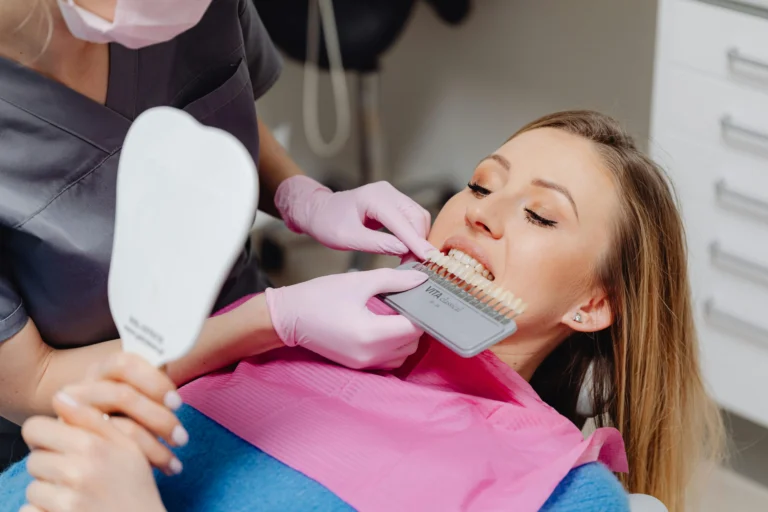

Veneers typically last between 10 to 15 years, depending on material type, oral habits, and maintenance. At Rod Gleave DMD, veneers are designed as part of a long-term cosmetic strategy that focuses on both durability and natural aesthetics.
What it is: Thin shells placed over the front of teeth to improve appearance
Who it is for: Patients with discoloration, chips, gaps, or uneven teeth
Main benefits: Improves smile appearance, enhances symmetry, resists stains
Limitations: May require replacement over time
Timeline / durability: Typically lasts 10–15 years, sometimes longer with proper care
Veneer lifespan depends on multiple structural and behavioral factors.
If pressure or habits are not managed, then veneers may wear or fracture sooner.
Porcelain veneers generally last longer due to stronger material properties.
Porcelain veneers:
Composite veneers:
If long-term durability is the goal, then porcelain veneers may be recommended.
Certain habits and conditions may reduce veneer durability.
Example: If veneers are exposed to repeated grinding, then structural stress may reduce lifespan.
Veneer longevity may improve with consistent care and protective habits.
If maintenance is consistent, then veneers may last beyond average expectations.
Porcelain veneers are highly resistant to staining, but surrounding teeth may still change color.
If color uniformity changes, then treatments such as teeth whitening may help improve overall appearance.
Veneers may need replacement if structural or cosmetic changes occur.
Common signs include:
If structural changes occur, then evaluation may determine whether replacement is needed.
Different cosmetic treatments offer varying durability and flexibility.
Veneers:
Tooth bonding:
Tooth contouring:
If minor corrections are needed, then tooth bonding or tooth contouring may be considered.
Veneers are considered a long-term treatment, but not permanent.
If long-term cosmetic improvement is desired, then veneers may provide stable results with proper care.
Veneers are often used as part of a broader cosmetic treatment strategy.
If multiple aesthetic concerns are present, then smile makeover planning may help coordinate treatment.
Veneer damage may occur due to trauma or long-term wear.
If damage occurs suddenly, then prompt assessment may help preserve the tooth.
Do veneers last forever?
No. They typically last 10–15 years but may require replacement over time.
Can veneers fall off?
They may loosen if bonding weakens or underlying structure changes.
Are veneers worth it long term?
They may provide long-lasting aesthetic improvement when properly maintained.
Veneer longevity depends on material quality, bite balance, and daily habits that affect long-term wear. Over time, pressure, lifestyle factors, and natural changes in teeth and gums may influence how long veneers maintain their appearance and function.
If you are noticing changes such as chipping, color differences, or uneven edges, these signs may indicate wear or the need for evaluation. If this applies, assessing the condition of your veneers may help determine whether maintenance, repair, or replacement is appropriate.
You can request a consultation with Rod Gleave DMD to evaluate your veneers, review your goals, and determine the most suitable approach for maintaining or improving your smile.